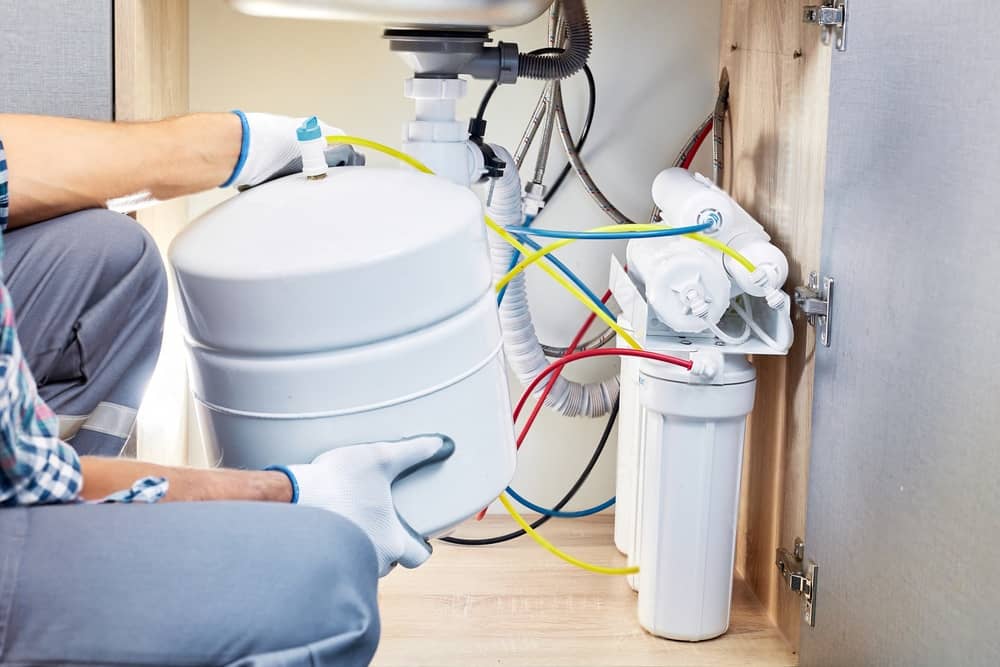
Water Filtration System Installation

Installation of water treatment systems

Water Softener, Filtration & Reverse Osmosis Installation

Santa Clarita’s groundwater carries a notably high mineral content, which is why so many homes here deal with scale on fixtures, spotty dishes and glassware, dry skin after showers, and water heaters that fail years earlier than they should. A water treatment system is the fix, but which system depends on the actual problem:

  • Water softeners — remove the calcium and magnesium causing hardness, protecting pipes and appliances long-term. Best if scale buildup and appliance wear are the main concern. In Santa Clarita this means an exchange-tank system rather than a self-regenerating unit — see the note below.
  • Whole-house filtration — targets chlorine, sediment, and taste/odor issues across every tap in the house, but doesn’t remove hardness minerals the way a softener does.
  • Reverse osmosis (RO) — installed at the kitchen sink (or whole-house for larger systems) for the highest level of purification, removing dissolved solids that filtration alone won’t catch. Best for drinking water quality specifically.

A local rule to know: Santa Clarita Valley Sanitation District has banned new self-regenerating (automatic) water softeners since 2009 for any home connected to the sewer system, to limit chloride reaching the Santa Clara River. The rule covers both sodium chloride and potassium chloride units. Homes on a septic system are exempt. If softening is the goal on a sewer-connected property, the compliant options are an exchange-tank softener (regenerated off-site, so nothing discharges locally) or a salt-free conditioner (reduces scale effects without removing hardness minerals). Whole-house filtration and reverse osmosis are unaffected by this rule.

Many homes end up with a combination — a softener for the whole house plus an RO system under the kitchen sink for drinking water. We’ll test your water’s actual hardness and composition before recommending a system, rather than selling a one-size-fits-all setup.

Last updated: September 2026

Signs Your Water Needs Treatment

Consider a water treatment system if you notice:

  • White or chalky scale buildup around faucets, showerheads, or on glass shower doors
  • Soap that doesn’t lather well, or leaves a filmy residue on skin and hair
  • Dishes coming out of the dishwasher spotted or cloudy
  • A metallic, chlorine, or off taste from the tap
  • A water heater needing more frequent flushing or repair than seems normal

Installation typically includes sizing the system to your household’s water usage, connecting it to the main supply line, and setting up any needed drain line for the system’s backwash or reject water. We handle permitting where the city requires it and walk you through maintenance — tank exchanges for softeners, filter changes for filtration and RO systems — so the system keeps performing at the level it did on day one.

Softener, Filtration, or RO: Which One Fits Your Home?

These three systems solve different problems, and buying the wrong one is the most common mistake we see:

  • Scale on fixtures, spotted dishes, dry skin: a water softener is the fix, because it removes the hardness minerals — in Santa Clarita that means an exchange-tank unit rather than a self-regenerating one (self-regenerating softeners are banned for homes on the sewer system).
  • Chlorine taste, odor, or sediment: whole-house filtration handles this, but it will not remove hardness.
  • The cleanest possible drinking and cooking water: reverse osmosis at the kitchen sink.
  • More than one of the above: a softener for the whole house plus RO for drinking water is the most common combination in Santa Clarita homes.

We test your water first, so the recommendation is based on what is actually in it rather than a standard package.

What Hard Water Does to a Santa Clarita Home

Hard water damage is gradual, which is why it is easy to miss until an appliance fails early:

  • Water heaters: mineral scale settles inside the tank and on the heating element, making the unit work harder and shortening its life. If your heater is already struggling, see our water heater repair and replacement service.
  • Fixtures and pipes: scale narrows aerators and showerheads, and builds up inside supply lines over the years.
  • Appliances: dishwashers and washing machines wear faster, and soap works less effectively, so you use more of it.

Treating the water where it enters the house protects everything downstream of it, which is why a whole-house softening solution often pays for itself in avoided repairs — just note that on a sewer-connected property this means an exchange-tank system, not a self-regenerating one.

How Installation Works

  1. Water test. We measure hardness and check for chlorine and sediment before recommending anything.
  2. Sizing. The system is sized to your household’s water use, so it regenerates or filters at the right pace.
  3. Placement. Most systems go near the main supply line, usually in the garage or utility area, and need a nearby drain and power outlet.
  4. Local rule check. Santa Clarita Valley Sanitation District has banned new self-regenerating (automatic) water softeners since 2009 for homes connected to the sewer system, because their brine discharge raises chloride levels in the Santa Clara River — the rule covers both sodium chloride and potassium chloride units. Homes on septic are exempt. We confirm which category your property falls into and recommend a compliant system rather than one that would have to be removed later.
  5. Startup and walkthrough. We commission the system, confirm it is delivering treated water, and show you what maintenance it needs.

Maintenance: What to Expect

  • Exchange-tank softeners: the tank is swapped on a set schedule, so there is no salt to refill on site. Salt-free conditioners: the media typically needs replacing every few years.
  • Whole-house filters: cartridges are replaced on a schedule that depends on the model and how much sediment your water carries.
  • Reverse osmosis: pre-filters are replaced regularly, and the membrane is replaced every few years.

Exact intervals vary by model and by your household’s water use, and we give you a simple schedule for your specific system at installation.

Frequently Asked Questions

Can I install a regular self-regenerating water softener in Santa Clarita?

Not if your home is connected to the sewer system. Santa Clarita Valley Sanitation District has banned new self-regenerating softeners since 2009 because of chloride limits on the Santa Clara River, covering both sodium and potassium chloride units. Homes on septic are exempt. We will tell you which compliant option fits your property.

Do I need both a softener and an RO system?

Not always. A softener protects your pipes, heater, and appliances. RO improves drinking water quality. Many homes benefit from both, but the water test tells us whether you need each.

Can these systems be added to an existing home?

Usually yes. What matters is access to the main supply line, a place to drain, and power. We confirm this during the water test visit.

What is the difference between an exchange-tank softener and a self-regenerating one?

A self-regenerating unit regenerates on site and discharges brine to the sewer, which is exactly what the local ban targets. An exchange-tank softener is swapped out and regenerated off-site, so nothing discharges locally, which is why it stays compliant.

Will this protect my water heater?

Softened water slows scale buildup inside the tank considerably, which helps the heater run efficiently and last longer. It does not repair existing damage, so an older, already-scaled heater may still need service.

How long does installation take?

Often a few hours to a day, depending on the system and how accessible the plumbing is. We give you a time estimate before we start.
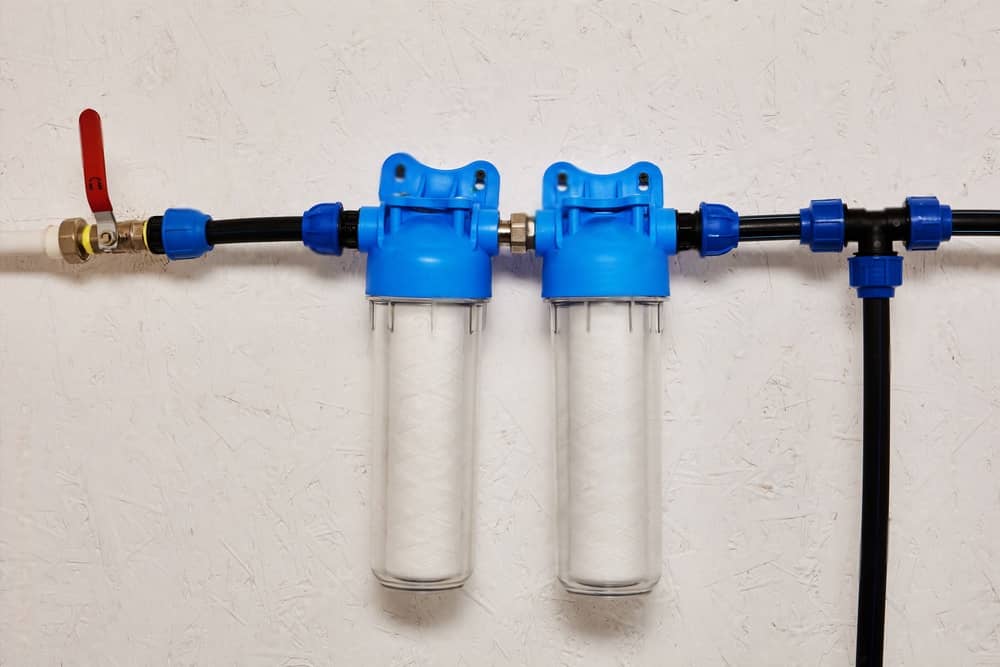

installation of dual stage water filtration system

Do You Want To Hire A Local Plumber In Your Area? Contact Us Now!