
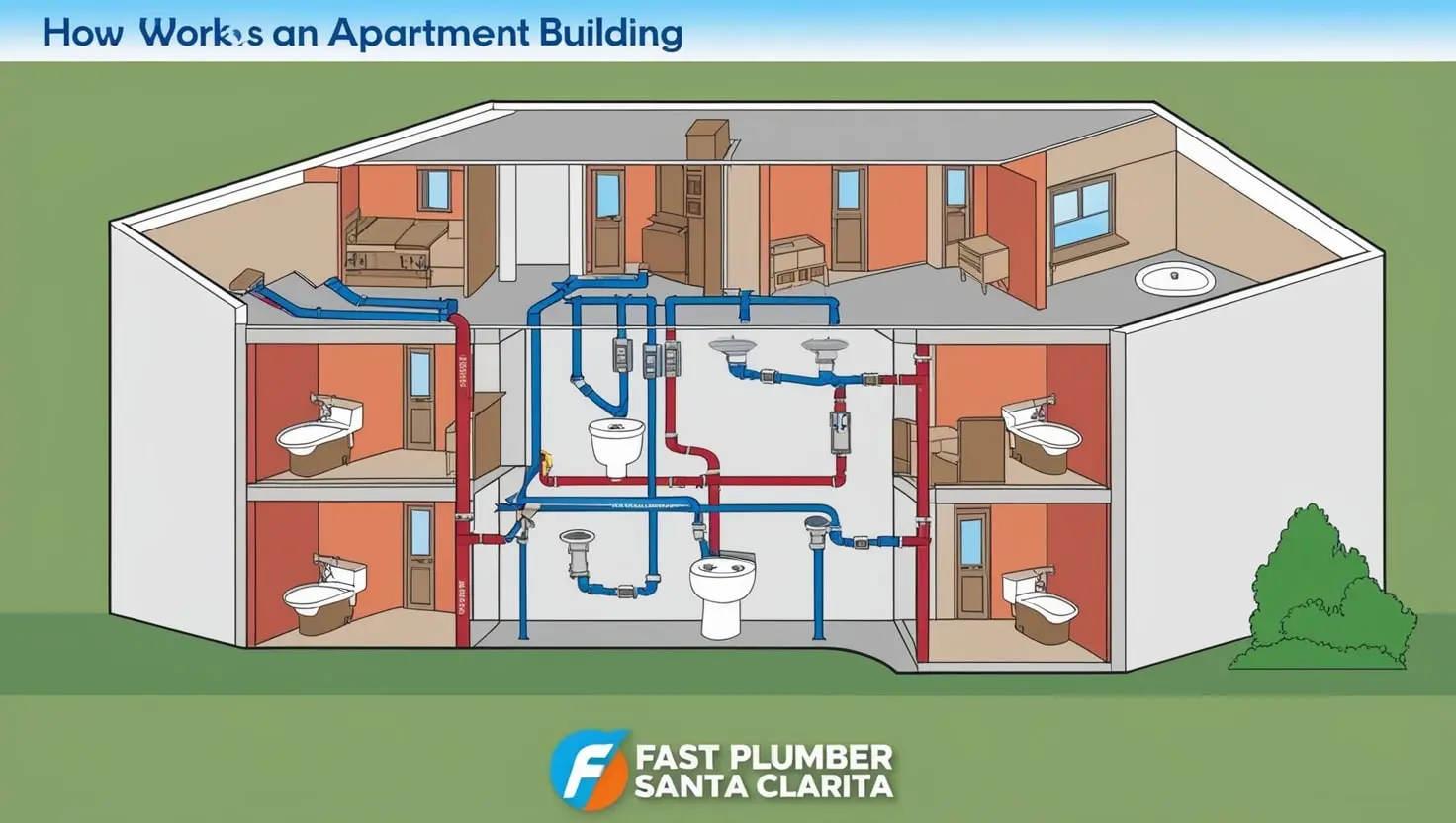
A clogged drain in a single-family home is your problem alone. The same clog in an apartment building can back up into three other units before anyone figures out where it started. Apartment plumbing isn’t just a smaller version of house plumbing — it’s a shared system where one unit’s issue can quickly become everyone’s issue, which is exactly why understanding how it actually works matters, whether you’re a tenant, a property manager, or an owner.
Last updated: September 2026
The Basic Layout: What’s Shared and What Isn’t
Most apartment buildings split plumbing into two categories: individual unit lines (the sink, toilet, and shower inside your specific apartment) and shared building infrastructure (the main stack that carries waste down through the building, and the main supply line that brings water in). Understanding which category a problem falls into determines who’s responsible and how urgent it is.
- Unit-level plumbing: fixtures, traps, and branch lines serving a single apartment — typically the tenant’s or unit owner’s responsibility to report, though not always to pay for.
- Building-level plumbing: the vertical stack that multiple units drain into, the main water supply line, and any shared water heater or boiler system — always the property’s responsibility.
Why One Unit’s Clog Can Affect Several Others
Apartment buildings use a vertical stack system: waste from units on multiple floors flows into a single shared vertical pipe. If that stack gets blocked — often from grease, wipes, or buildup at one point — water and waste can back up into any unit connected above the blockage, not just the unit that caused it. This is why a backup on the third floor can suddenly become a backup in a second-floor unit that did nothing wrong.
Common Apartment Plumbing Issues and Who Handles Them
| Issue | Usually Caused By | Typically Handled By |
|---|---|---|
| Slow or backed-up drain in one unit | Unit-level clog | Property maintenance, tenant reports it |
| Multiple units backing up at once | Shared stack blockage | Property management, building-wide plumber call |
| No hot water building-wide | Shared water heater/boiler failure | Property owner, building system repair |
| Low water pressure in one unit only | Unit-level fixture or valve issue | Unit-level repair |
| Low water pressure building-wide | Main supply line issue | Property owner, building-level repair |
What Tenants Should Know
Report plumbing issues promptly, even minor ones — a slow drain today can be a shared-stack blockage tomorrow, and the earlier it’s addressed, the less likely it affects neighboring units. Avoid flushing wipes, grease, or paper towels, since these are the most common causes of shared-stack blockages in multi-unit buildings.
What Property Managers Should Know
Because a single stack blockage can affect several units simultaneously, apartment buildings benefit from periodic camera inspection of shared lines — catching a partial blockage before it becomes a multi-unit backup is far cheaper than an emergency call affecting five units at once. Documenting maintenance history also matters if a dispute arises over which unit’s actions caused a shared-line issue.
Frequently Asked Questions
If my apartment’s drain backs up, is it my fault or the building’s?
It depends on where the blockage is. If it’s isolated to your unit’s fixtures, it’s typically unit-level. If multiple units are affected simultaneously, it’s almost always a shared-stack issue and the property’s responsibility.
Why does my apartment lose water pressure when someone else runs their shower?
This usually points to an aging or undersized main supply line struggling to serve the whole building’s simultaneous demand — a building-level issue rather than anything wrong with your unit specifically.
Can a plumbing issue in one unit really affect a unit on a different floor?
Yes, if it involves the shared vertical stack. Units connected to the same stack above a blockage point can all be affected regardless of floor.
Get a Straight Answer on Shared vs. Unit-Level Issues
Figuring out whether a plumbing problem is isolated or building-wide is the first step to fixing it correctly. Fast Plumber Santa Clarita provides drain cleaning and leak detection for multi-unit properties across the Santa Clarita Valley.
Call (661) 215-5518 for apartment or multi-unit plumbing service, or request a quote online.